
You can sharply cut mosquito breeding by removing even teaspoon-sized standing water: check gutters, birdbaths, plant saucers, toys and tarps weekly and after rain natural mosquito repellent, then drain or cover them. Improve grading and add French drains or swales so water drains within 48–72 hours. Thin dense shrubs and prune canopies to reduce shaded, damp pockets. For ponds use pumps, fish or Bti larvicides as labeled. Keep a checklist and log actions to track what works and learn more.

Inspect Your Yard Regularly for Standing Water
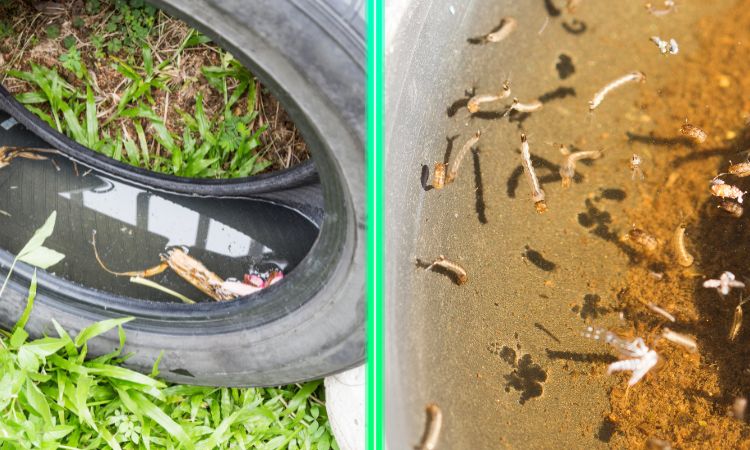
When you inspect your yard, focus on any container or surface that can hold as little as a teaspoon of water—birdbaths, gutters, plant saucers, tarps, toys igreenasia, and tree holes all matter because Aedes and Culex mosquitoes can breed in tiny pools; check these spots at least once a week and immediately drain, tip, or cover anything that collects water. Use a seasonal checklist to schedule inspections aligned with rainfall and temperature shifts, and integrate simple stormwater mapping to identify low spots where runoff pools. Record findings, actions taken, and dates so you can repeat effective measures and adjust timing. Prioritize eliminating transient water, maintaining gutters and drains, and securing covers. These steps give you control and reduce local breeding habitats efficiently.
Manage Water Features and Containers Properly
After you’ve identified and eliminated obvious standing water, focus on how to manage intentional water features and any containers that regularly hold water so they don’t become mosquito nurseries. Inspect birdbaths, planters, bucket lids and tarps weekly; empty or refresh water every three days to interrupt mosquito life cycles. For decorative ponds, install a pump, aerator or fish, and cover ponds with fine mesh where practical — cover ponds reduce adult emergence. Keep rain barrels sealed and elevated; drill drainage holes in seldom-used containers. Maintain roofline hygiene: clean gutters to prevent pooled water and check downspouts for clogs. Use larvicides (Bti) only as directed. These targeted, evidence-based actions give you control over mosquito sources without heavy chemical reliance or major construction.
Improve Drainage and Soil Grading
Because mosquitoes breed where water collects, you’ll want to correct low spots, compacted soil and blocked flow paths so water drains away within 48–72 hours; grade soil to create a 1–2% slope away from foundations, patios and play areas, loosen compacted turf and add organic topsoil or gravel where needed, and install shallow swales or French drains to carry runoff to storm drains or dry wells. Take these precise steps to reduce standing water and preserve your site’s usability:
- Regrade slopes near the foundation to achieve a consistent 1–2% pitch away from structures.
- Break up compacted soil, aerate turf, and add topsoil to restore infiltration.
- Install French drains or shallow swales to intercept and convey runoff.
- Route discharge to municipal drains or dry wells, avoiding pooling zones.
Use Landscaping to Reduce Shaded, Moist Hiding Places
Prune dense shrubs, thin tree canopies, and replace moisture‑loving groundcovers so shaded, cool pockets that attract resting mosquitoes are minimized; aim for at least 50% sunlight penetration to lawns and paths during midday, maintain 3–4 foot clear zones around foundations and play areas, and choose low‑water, open-structured plants (grasses, native perennials) that dry quickly after rain. You’ll remove shade-loving plants that retain humidity and substitute with species rated for sun and rapid evapotranspiration. Mulch beds with coarse, dry mulch and avoid compacted layers that hold moisture. Keep irrigation timed to morning and targeted to roots so surface drying occurs by afternoon. Inspect under eaves, dense hedges, and paved depressions monthly, and prune or regrade as needed to preserve drier, airier perimeter zones free of mosquito refuge.
Apply Larvicides and Biological Controls Safely
When you’re targeting standing water that can’t be drained or screened, apply larvicides and biological agents precisely and sparingly to interrupt mosquito development. You want effective, low-impact options that preserve freedom to use your yard: choose bacterial larvicides (Bti) for containers and small pools, and consider mosquito fish in larger, permanent ponds. Read labels, follow dosage and timing, and avoid overapplication that harms non-target life.
- Inspect water bodies monthly; treat only stagnant zones where larvae are present.
- Use Bti granules or dunks per label rates; reapply after heavy rain or when efficacy drops.
- Introduce mosquito fish only if they’re appropriate for local ecosystems and legal.
- Monitor outcomes and adjust frequency to minimize environmental impact.